National City
Heart of the South Bay
Culturally rich South Bay city with strong community ties, revitalizing downtown, and proximity to downtown San Diego and the border.
National City Market Snapshot
Last updated: Q1 2026
$650K
Single family
$400K
Condo / townhome
30
Days listed
+6%
Price change
Want the full National City market report?
Get detailed stats on inventory, price trends, and forecasts delivered to your inbox.
Request Market ReportQuick Facts
- ZIP Codes
- 91950
- School District
- National School District / Sweetwater Union
- Walk Score
- 60/100
- Bike Score
- 48/100
- Nearest Military Base
- Naval Base San Diego (nearby)
- Coordinates
- 32.6781, -117.0992
Why National City?
- Mile of Cars — iconic auto dealership district
- Kimball Park and community center
- Easy trolley access to downtown San Diego
- Strong cultural diversity and community events
- Most affordable city in metro San Diego
- Waterfront bayfront development potential
Get the National City Market Report
Median prices, inventory trends, days on market, and price forecasts for National City — delivered to your inbox monthly.
Be First to See New National City Listings
Get notified the moment a new home hits the market in National City. Many of the best properties sell within days — don't miss out.
National City occupies a unique position in San Diego's geography and real estate market. Sandwiched between downtown San Diego to the north, Chula Vista to the south, and the San Diego Bay to the west, it's one of the closest communities to downtown that still offers genuinely affordable homeownership. And that proximity — combined with significant redevelopment momentum — makes National City one of the most interesting opportunities in the county right now.
Let me be straight: National City has historically had a reputation that gave some buyers pause. It's a working-class city with older housing stock, and it hasn't always gotten the investment or attention it deserves. But that's exactly what creates opportunity, and the transformation happening here is real. The city has invested heavily in infrastructure, the trolley system provides direct downtown access, and several major development projects are reshaping the waterfront and downtown core.
The housing stock in National City is predominantly older — you'll find a lot of post-war homes from the 1940s through 1960s, small ranch-style houses on modest lots, plus stucco duplexes, triplexes, and small apartment buildings. Architectural styles are utilitarian more than charming, but that's changing as renovation and new construction increase. Typical single-family homes have three bedrooms, one to two bathrooms, 1,000-1,400 square feet, and sit on lots of 5,000-7,000 square feet. In the newer developments near the Marina District and along the Mile of Cars corridor, you'll find modern townhomes and condos with contemporary finishes. Prices for single-family homes typically range from $500K-$700K, with updated or larger homes pushing toward $750K. Condos and townhomes start in the mid-$400Ks. If you're looking at multi-family investment properties — duplexes, triplexes, fourplexes — National City has some of the best inventory and cap rates in the county, with prices ranging from $650K to $1.2M depending on unit count and condition.
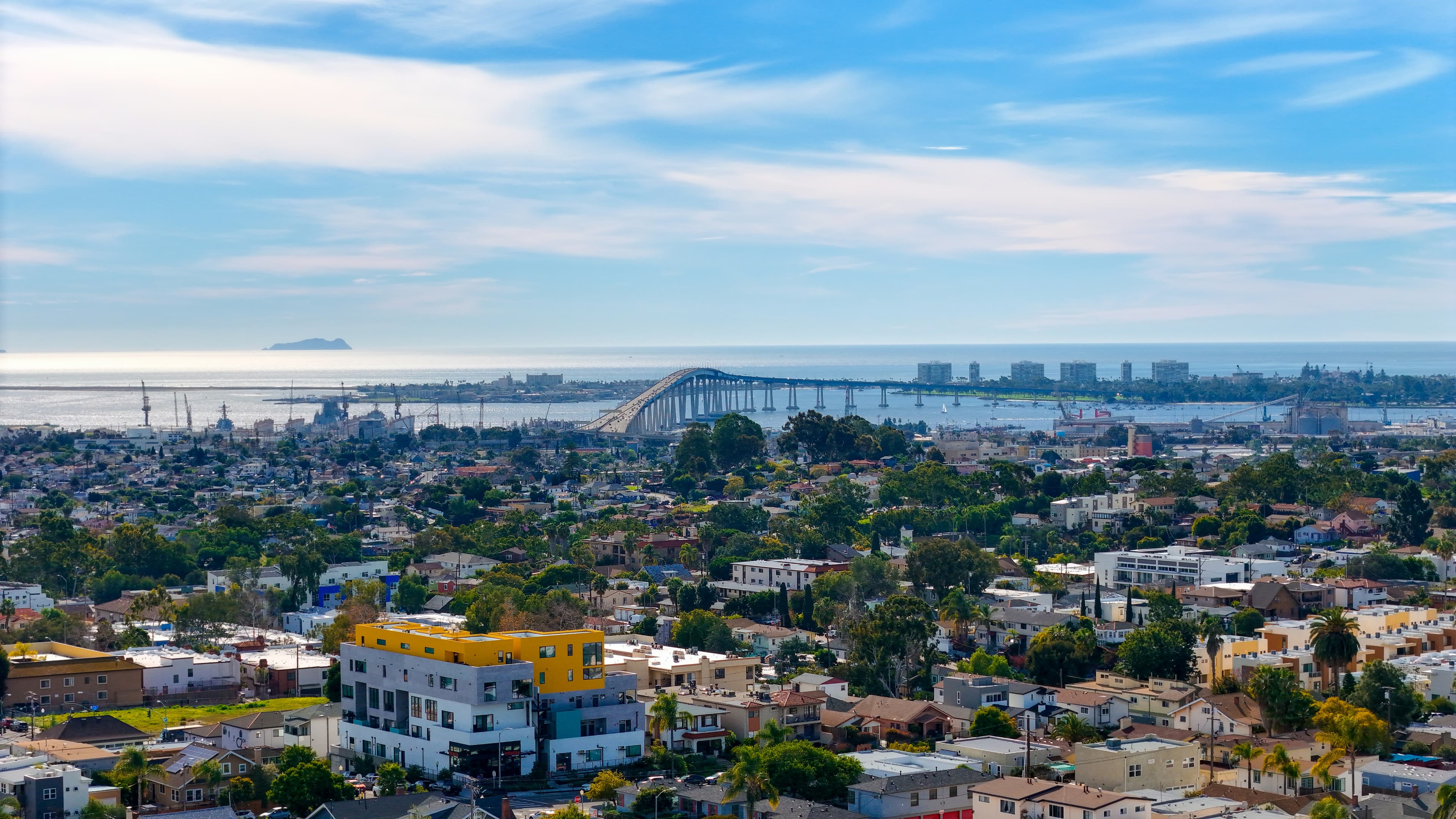
The city divides roughly into a few distinct areas. The western waterfront zone along the bay is where most of the redevelopment energy is focused. The National City Bayfront project is bringing new parks, a promenade, and mixed-use development to the waterfront — Pepper Park already offers stunning views of the downtown skyline, Coronado Bridge, and the bay. The central residential neighborhoods between I-5 and I-805 are the traditional working-class heart of the city — grid streets, older homes, local markets, and taco shops. The eastern hillside neighborhoods (like the area around Sweetwater Road and Plaza Boulevard heading east) climb toward higher ground and offer slightly larger lots, some views, and a bit more breathing room.
Schools are served by the National School District for elementary and the Sweetwater Union High School District for secondary. I'll be honest: school ratings in National City are mixed, and this is an area where families need to do their homework on specific campuses. Sweetwater High School is the primary high school, and while it has strong community support and improving programs, its test scores have historically lagged behind schools in neighboring communities. For families who prioritize school ratings above all else, this is a factor to weigh carefully. Some families opt for charter schools or nearby magnet programs.
Where National City absolutely shines is in its cultural richness and food scene. The city has a deep Filipino-American community — one of the largest in all of Southern California — and the Filipino food and markets here are outstanding. Tita's Kitchenette, Seafood City Supermarket on Highland Avenue, and numerous bakeries and restaurants serve authentic Filipino cuisine that you simply cannot find elsewhere in San Diego. The Hispanic cultural influence is equally strong, with exceptional taquerias, panaderias, and family restaurants throughout the city. Thursdays on Highland is a popular evening event with food, music, and community gathering. The arts scene is emerging, with new murals, galleries, and cultural events adding vibrancy to the downtown area.
The Mile of Cars on National City Boulevard is the city's most well-known commercial corridor — a long stretch of auto dealerships that has been an institution for decades. While it's not exactly a lifestyle amenity, the tax revenue it generates helps fund city services, and the corridor itself is being reimagined with better streetscaping and mixed-use development at its edges. Westfield Plaza Bonita, just across the border in Bonita, provides major retail and dining options within a five-minute drive.
Commute times are National City's secret weapon. Downtown San Diego is 10-12 minutes by car via I-5, and the Blue Line Trolley runs through the city with stations at 8th Street, 24th Street, and Bayfront/E Street, providing a direct no-traffic connection to downtown, the Convention Center, and Petco Park in about 20 minutes. This is closer and faster than many neighborhoods that cost twice as much. Getting to UTC or Sorrento Valley takes 20-25 minutes via I-805 North to I-5, which is manageable. For anyone working downtown, National City's commute is genuinely one of the best in the county for the price.
Recreation includes Pepper Park and Bayfront Park on the water, Kimball Park in the city center (which has a recreation center, pool, and sports fields), and proximity to Sweetwater Regional Park in neighboring Bonita for hiking and nature. The bay itself offers kayaking and fishing access. National City isn't going to compete with La Jolla for outdoor recreation, but for an urban community at this price point, the options are solid and improving.
The market snapshot: the median home price is approximately $600K, making National City one of the most affordable urban communities in San Diego County. Prices have appreciated 6-8% annually over the past several years, and I expect this trend to continue as redevelopment projects come online. The rental market is strong — vacancy rates are low, and rental demand from the military (Naval Base San Diego is literally next door), cross-border commuters, and young professionals priced out of downtown keeps multi-family investments performing well.
Who should buy here: National City is ideal for first-time buyers who want to be close to downtown without paying downtown prices, investors looking for multi-family properties with strong rental income, renovation-minded buyers who can see potential in older homes, and military families who need proximity to Naval Base San Diego and don't want to pay Coronado or Point Loma prices. It's also increasingly attracting young professionals who work downtown and want actual homeownership — something that's nearly impossible in downtown itself without spending $600K+ on a condo with a $500/month HOA.
Insider tips: the single best value play in National City right now is buying an older single-family home on a larger lot (6,000+ square feet) and adding an ADU (accessory dwelling unit) in the back. The city has been supportive of ADU construction, lot sizes accommodate it, and the rental income from an ADU can effectively cut your mortgage payment in half. The neighborhoods between 18th Street and 30th Street, west of Highland Avenue, offer the best combination of lot sizes, proximity to trolley stations, and upcoming Bayfront spillover appreciation. For multi-family investors, focus on properties along the National City Boulevard corridor and the areas between Division Street and 8th Street — these are positioned to benefit most from the downtown-adjacent redevelopment.
The health care infrastructure is a notable asset — Paradise Valley Hospital is a major employer and provides convenient medical services for the community. The National City Fire Department is well-regarded, and the city has been investing in public safety improvements including better street lighting, park upgrades, and community policing programs. For seniors, National City has several affordable housing options and senior services that are more accessible than in pricier communities.
One thing I tell every buyer considering National City: drive the neighborhoods at different times of day and different days of the week. The character of a block can change dramatically from morning to evening, from Tuesday to Saturday. This is true of any urban community, but it's especially important here because National City is genuinely block-by-block. Two streets that are 100 yards apart can feel completely different. Take the time to get to know the specific blocks you're considering, talk to the neighbors, and spend a Saturday afternoon walking around.
Potential downsides: the older housing stock means many homes need significant work — plumbing, electrical, roofing, and cosmetic updates are common needs. Some pockets of the city still have higher crime rates than the county average, and street-by-street research matters. School ratings will concern some families. The industrial areas along the bay (Mile of Cars, some light industrial) mean that not every view or walk is picturesque. And while gentrification is improving property values, it's also creating affordability tension for longtime residents, which is a social dynamic to be aware of. Parking can be tight in the older residential areas — many homes were built in an era when families had one car, and the narrow streets and small garages aren't designed for today's two or three-car households. National City is a city in transition — that's both its greatest opportunity and its most honest challenge.
National City Neighborhood Tour
We're producing a walking/driving tour video for National City. Subscribe to be notified when it's ready.
Notify Me When ReadyNearby Attractions
Frequently Asked Questions
What is the median home price in National City?
As of Q1 2026, the median single-family home price in National City is approximately $650,000. Condos average around $400,000 — among the most affordable in San Diego County.
Is National City a good investment area?
National City offers strong investment potential with the lowest entry prices in metro San Diego, 6% annual appreciation, good rental demand from military and downtown workers, and upcoming bayfront development that could transform property values.