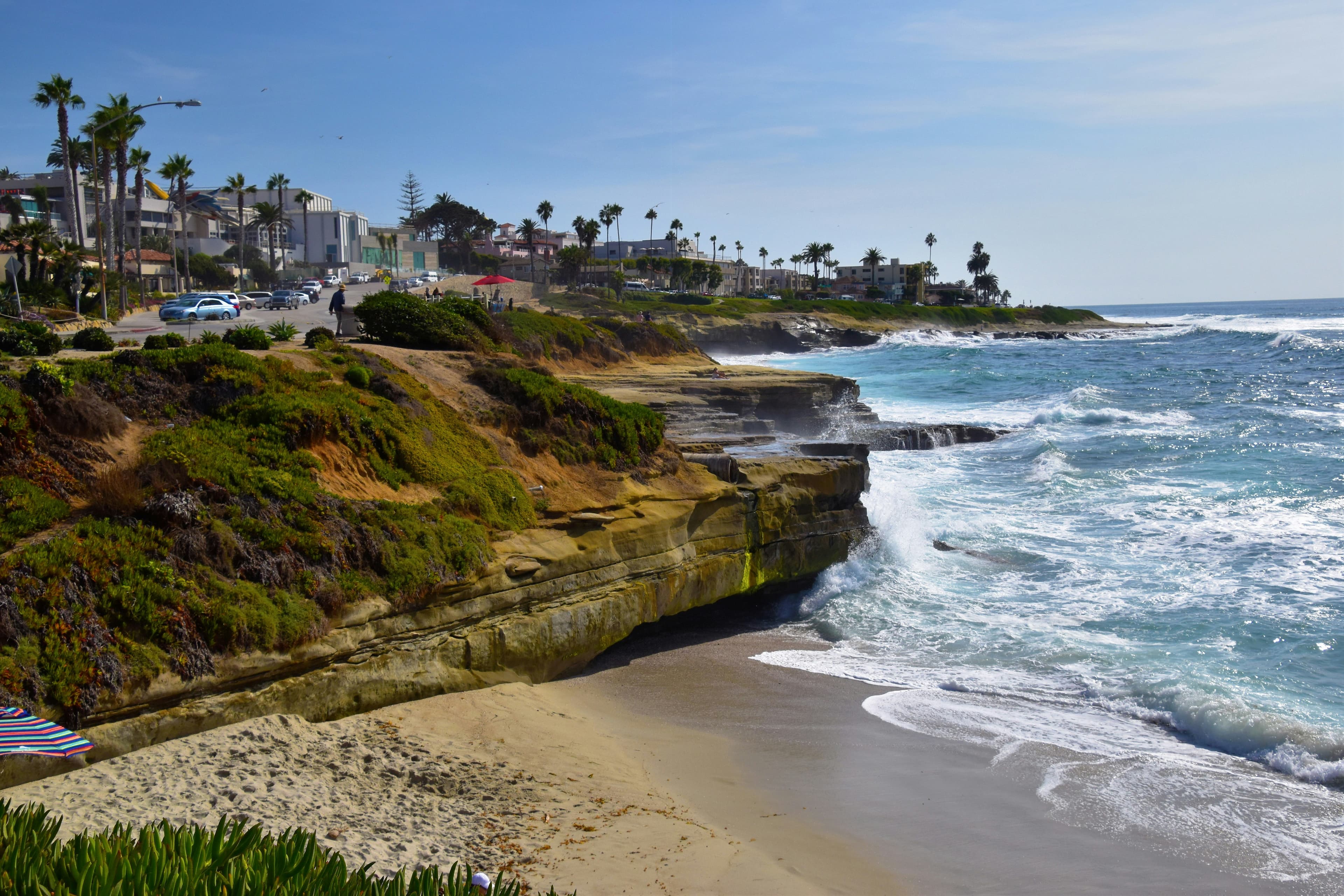
La Jolla
The Jewel of San Diego
Upscale coastal community known for stunning ocean views, world-class dining, and the famous La Jolla Cove. Home to UCSD and the Salk Institute.
La Jolla Market Snapshot
Last updated: Q1 2026
$2.5M
Single family
$1.1M
Condo / townhome
48
Days listed
+10.3%
Price change
Want the full La Jolla market report?
Get detailed stats on inventory, price trends, and forecasts delivered to your inbox.
Request Market ReportQuick Facts
- ZIP Codes
- 92037, 92038, 92039, 92092, 92093
- School District
- San Diego Unified
- Walk Score
- 52/100
- Bike Score
- 68/100
- Coordinates
- 32.8328, -117.2713
Why La Jolla?
- La Jolla Cove — world-famous swimming and snorkeling
- UCSD, Salk Institute, and the Torrey Pines biotech corridor
- Five distinct sub-neighborhoods from Bird Rock to University City
- George's at the Cove and Prospect Street fine dining
- La Jolla Shores — San Diego's best family beach
- Top public and private schools including The Bishop's School
Get the La Jolla Market Report
Median prices, inventory trends, days on market, and price forecasts for La Jolla — delivered to your inbox monthly.
Be First to See New La Jolla Listings
Get notified the moment a new home hits the market in La Jolla. Many of the best properties sell within days — don't miss out.
La Jolla is the crown jewel of San Diego real estate, and I don't say that lightly — I say it because after two decades of selling homes across this county, nothing else in our market combines natural beauty, intellectual prestige, dining culture, and sheer wealth of housing options the way La Jolla does. The name means "the jewel" in Spanish (though some linguists argue it's actually derived from a Native American word meaning "land of holes," referring to the sea caves — less romantic, but geologically accurate). Either way, La Jolla earns its reputation every single day.
What most people outside San Diego don't understand is that La Jolla isn't one neighborhood — it's at least five distinct communities, each with its own personality, price point, and lifestyle. Understanding the differences is the key to buying well here.
Bird Rock is my favorite sub-neighborhood to recommend to buyers who want La Jolla prestige with actual village livability. Centered along La Jolla Boulevard south of the main village, Bird Rock has transformed over the past fifteen years from a sleepy, slightly overlooked corridor into one of the most walkable, community-oriented neighborhoods in all of San Diego. The Bird Rock Coffee Roasters anchors the morning crowd, Beaumont's draws the evening one, and the stretch of La Jolla Boulevard between Midway and Forward Street has become a legitimate small-town main street with boutiques, restaurants, and a Saturday farmers' market vibe. Housing here runs from 1950s ranch homes on modest lots starting around $1.6M to newer custom builds and renovated Craftsman-inspired homes pushing $3M-$4M along the oceanfront on Calumet Avenue and nearby streets. The surf break at Bird Rock itself is underrated, the tide pools are spectacular, and the sense of community is stronger here than anywhere else in La Jolla.
Windansea is where San Diego's surf culture meets old-money La Jolla. The Windansea surf break is legendary — one of the most famous point breaks in California — and the beach shack at the foot of Nautilus Street is a designated historic landmark. The housing stock along Neptune Place, Chelsea Avenue, and Westbourne Street consists of a mix of 1940s-1960s cottages (some barely modified, some spectacularly renovated) and newer contemporary builds that architects love and traditionalists hate. This is the neighborhood where you'll find a $1.4M fixer-upper cottage sitting next to a $6M modern glass-and-steel showpiece. The vibe is salty, unpretentious by La Jolla standards, and fiercely protective of its surf-culture identity. Parking is a perpetual nightmare — streets are narrow, there are no lots, and during summer weekends you'll circle for twenty minutes.
La Jolla Shores is family La Jolla. The beach here is wide, flat, gentle, and protected by the La Jolla Underwater Park and Ecological Reserve — making it the safest swimming beach in the area and a magnet for families with young children. Kellogg Park sits right at the beach and is the site of countless birthday parties, picnics, and Sunday afternoon gatherings. The housing along Avenida de la Playa and Calle de la Plata ranges from older beach apartments to substantial single-family homes, typically $2M-$5M depending on proximity to the water and condition. The Shores also benefits from immediate adjacency to the Scripps Institution of Oceanography and the Birch Aquarium, giving the area an academic-meets-beach character. The downside: Avenida de la Playa floods during heavy rains because the drainage infrastructure dates back decades and the city has been glacially slow to fix it.
La Jolla Village — the core commercial district along Prospect Street and Girard Avenue — is where the money shows. George's at the Cove remains the crown jewel of San Diego restaurants, with its rooftop Ocean Terrace offering what might be the most spectacular dining view on the West Coast. Nine-Ten at the Grande Colonial Hotel serves inventive California cuisine that locals actually eat at regularly, not just for special occasions. Herringbone does upscale coastal, El Pescador Fish Market has been selling the freshest fish in town since 1974 from its tiny counter on Wall Street, and Goldfish Point Cafe is where you stop after a swim at the Cove. The Village's housing is primarily condominiums and luxury estates on the bluffs — the Prospect Street and Coast Boulevard corridor features some of the most expensive residential real estate in Southern California, with oceanfront estates regularly trading above $10M.
University City is the La Jolla value play. Adjacent to UCSD and the sprawling campus that houses the Salk Institute, the Sanford Consortium, and dozens of biotech firms, University City offers a different lifestyle: newer tract homes from the 1970s-1990s, good-sized lots, proximity to UTC and Westfield UTC mall, and prices that start around $1M for condos and townhomes and $1.3M-$1.8M for single-family homes. It doesn't have the ocean views or walkable village charm of coastal La Jolla, but it has excellent schools, a diverse community driven by UCSD faculty and biotech professionals, and a commute to Sorrento Valley or UTC that's measured in single-digit minutes.
Schools across La Jolla are strong. La Jolla Elementary feeds into Muirlands Middle School and then La Jolla High School, all within the San Diego Unified School District. La Jolla High is a high-performing public school with strong AP offerings and a beautiful campus on Nautilus Street. Private options include The Bishop's School (one of the most prestigious prep schools in Southern California), The Gillispie School, and Stella Maris Academy. For families, the combination of public and private school options in La Jolla is unmatched in San Diego.
Commute reality: La Jolla is not centrally located, and traffic on Torrey Pines Road, La Jolla Village Drive, and I-5 can be punishing. Downtown San Diego is 20-35 minutes depending on time of day and whether you take the coast route or the freeway. Sorrento Valley is 10-15 minutes. UTC is literally next door. But during weekday rush hour, getting out of La Jolla proper via Torrey Pines Road can add fifteen minutes to any trip. The UCSD Blue Line Trolley extension has improved transit options modestly, with a station at UCSD that connects to downtown.
The market: La Jolla's median home price sits around $2.2M, but that number obscures enormous range. You can enter the market with a University City condo for under $700K or spend $25M on a Prospect Street estate. The bread-and-butter La Jolla single-family home — three bedrooms, updated, in Bird Rock or the Shores — trades between $2M and $3.5M. Appreciation has been steady at 4-6% annually, and La Jolla real estate has historically been one of the most recession-resistant markets in San Diego because the buyer pool includes institutional wealth, tech money, biotech executives, and international buyers.
Who should buy here: La Jolla is for buyers who want the best of San Diego coastal living and have the budget to match. If you work at UCSD, the Salk Institute, Scripps Research, or any of the Torrey Pines biotech corridor firms, living in La Jolla means a short commute and a world-class lifestyle. Families with school-age children get excellent options. Retirees who want culture, dining, and ocean beauty without the humidity and hurricanes of Florida find La Jolla ideal.
Insider tips: Bird Rock is where the smart money goes for the best combination of value, livability, and appreciation potential within La Jolla. If you can handle a renovation project, the 1950s-1960s ranch homes south of Bird Rock along La Jolla Boulevard represent the best per-square-foot value in the 92037 ZIP code. For condos, look at the buildings along Coast Boulevard south of the Village — they're older, the HOAs are higher, but the ocean views are permanent and the location is irreplaceable. And never underestimate the Torrey Pines connection: the Torrey Pines State Natural Reserve, the Torrey Pines Golf Course (home of the Farmers Insurance Open), and the Torrey Pines Gliderport create a recreation corridor that makes northern La Jolla one of the most spectacular places to live in America.
Honest downsides: La Jolla is expensive, and the cost of living extends beyond home prices — dining, groceries at Von's on Girard, and services all carry a premium. Parking in the Village is a disaster, especially in summer. The community can feel insular and older-skewing — nightlife is essentially nonexistent. Traffic congestion during tourist season (June through September) will test your patience. And the city services, being part of the broader City of San Diego rather than an independent municipality, sometimes fall short of what you'd expect for a community at this price point — road maintenance, for instance, has been a persistent complaint. But these are the downsides of a place that 95% of San Diegans would move to in a heartbeat if they could afford it. La Jolla's reputation is earned.
La Jolla Neighborhood Tour
We're producing a walking/driving tour video for La Jolla. Subscribe to be notified when it's ready.
Notify Me When ReadyNearby Attractions
Frequently Asked Questions
What is the median home price in La Jolla?
As of Q1 2026, the median single-family home price in La Jolla is approximately $2.5 million. Condos start around $1.1 million. Prices are up about 10.3% year-over-year.
What are the best neighborhoods within La Jolla?
La Jolla has five distinct sub-neighborhoods: Bird Rock (walkable, community-oriented), Windansea (surf culture, mix of cottages and modern builds), La Jolla Shores (family-friendly beach), La Jolla Village (luxury condos, fine dining), and University City (best value, near UCSD).
How are the schools in La Jolla?
La Jolla offers excellent schools. Public options include La Jolla Elementary, Muirlands Middle, and La Jolla High School (San Diego Unified). Private schools include The Bishop's School, one of the most prestigious prep schools in Southern California.
Is La Jolla good for families?
Yes. La Jolla Shores has the safest family swimming beach in San Diego, schools are top-rated, and the community is safe and walkable. Bird Rock and La Jolla Shores are particularly popular with families.